

As a seasoned copper alloy tube supplier, I've witnessed firsthand the diverse applications and unique characteristics of various copper alloy tube materials. Each type of copper alloy tube brings its own set of properties to the table, making it suitable for specific industries and uses. In this blog post, I'll delve into the differences between some common copper alloy tube materials, helping you make an informed decision when choosing the right tube for your project.
1. H62 Brass Tube
H62 Brass Tube is one of the most widely used brass tubes in the market. Composed of approximately 62% copper and 38% zinc, it offers a good balance of strength, ductility, and corrosion resistance.
Physical and Mechanical Properties
- Strength: H62 brass tube has moderate strength, which makes it suitable for applications where a certain level of structural integrity is required. It can withstand relatively high pressures without deforming easily.
- Ductility: This alloy is highly ductile, meaning it can be easily formed into various shapes through processes such as bending, drawing, and rolling. This property makes it a popular choice for manufacturing complex components.
- Corrosion Resistance: H62 brass tube exhibits good corrosion resistance in many environments, including freshwater and some mild chemical solutions. However, it may be susceptible to dezincification in certain aggressive environments, especially those with high chloride concentrations.
Applications
- Plumbing: Due to its good corrosion resistance and ease of installation, H62 brass tube is commonly used in plumbing systems for water supply and drainage.
- Electrical Equipment: Its electrical conductivity makes it suitable for electrical connectors, terminals, and other components in the electrical industry.
- Decorative Purposes: The attractive golden color of H62 brass tube makes it a popular choice for decorative applications, such as architectural trim, furniture hardware, and jewelry.
2. C3604 Brass Tube
C3604 Brass Tube, also known as free - cutting brass tube, is another important copper alloy tube material. It contains copper, zinc, and a small amount of lead, which gives it excellent machinability.
Physical and Mechanical Properties
- Machinability: The addition of lead in C3604 brass tube significantly improves its machinability. It can be easily cut, drilled, and turned with high precision, resulting in smooth surfaces and tight tolerances. This property reduces machining time and costs, making it ideal for high - volume production.
- Strength and Hardness: C3604 brass tube has a relatively high strength and hardness compared to some other brass alloys. It can maintain its shape and integrity under moderate stress.
- Corrosion Resistance: Similar to H62 brass tube, C3604 has good corrosion resistance in many common environments. However, the presence of lead may limit its use in some applications where lead - free materials are required, such as in contact with drinking water.
Applications
- Automotive Industry: C3604 brass tube is widely used in the automotive industry for manufacturing components such as gears, bushings, and fittings. Its excellent machinability allows for the production of complex parts with high precision.
- Electronics: In the electronics industry, it is used for making connectors, switches, and other small - sized components that require good electrical conductivity and easy machining.
- Mechanical Engineering: Due to its strength and machinability, C3604 brass tube is also used in general mechanical engineering applications, such as valve bodies and hydraulic fittings.
3. H65 Brass Round Tube
H65 Brass Round Tube is a copper - zinc alloy with a copper content of about 65%. It offers a combination of improved properties compared to H62 brass tube.
Physical and Mechanical Properties
- Strength and Ductility: H65 brass round tube has higher strength than H62 brass tube while still maintaining good ductility. This makes it suitable for applications that require both strength and formability, such as in the production of springs and wire - forming operations.
- Corrosion Resistance: It has better corrosion resistance than H62 brass tube in some environments, especially in terms of resistance to dezincification. This makes it a more reliable choice for long - term use in corrosive conditions.
- Color and Appearance: H65 brass has a brighter and more uniform color compared to H62 brass, which may be preferred for decorative applications where a more aesthetically pleasing appearance is desired.
Applications
- Aerospace and Aviation: The combination of strength, ductility, and corrosion resistance makes H65 brass round tube suitable for some aerospace and aviation applications, such as in the manufacturing of aircraft fittings and connectors.
- Musical Instruments: Its good acoustic properties and formability make it a popular choice for manufacturing musical instruments, such as trumpets, trombones, and saxophones.
- Marine Industry: Due to its improved corrosion resistance, H65 brass round tube can be used in marine applications, such as in boat fittings and seawater - handling systems.
Comparison of the Three Materials
Machinability
- C3604 brass tube has the best machinability among the three due to the presence of lead. H62 and H65 brass tubes are also machinable, but they may require more effort and specialized tools compared to C3604.
Strength
- H65 brass round tube generally has the highest strength, followed by C3604 brass tube, and then H62 brass tube. However, the specific strength requirements of an application should be carefully considered when choosing the material.
Corrosion Resistance
- H65 brass round tube offers better corrosion resistance, especially in terms of dezincification resistance, compared to H62 brass tube. C3604 brass tube has similar corrosion resistance to H62, but the lead content may be a concern in some applications.
Cost
- The cost of these materials can vary depending on factors such as market conditions, production volume, and specific requirements. Generally, C3604 brass tube may be slightly more expensive due to its excellent machinability, while H62 brass tube is often the most cost - effective option for many common applications.
Conclusion
In conclusion, the choice of copper alloy tube material depends on a variety of factors, including the specific application requirements, mechanical properties, corrosion resistance, and cost. As a copper alloy tube supplier, I understand the importance of providing the right material for each customer's needs. Whether you need H62 brass tube for plumbing, C3604 brass tube for high - precision machining, or H65 brass round tube for demanding applications, I can offer high - quality products and professional advice.

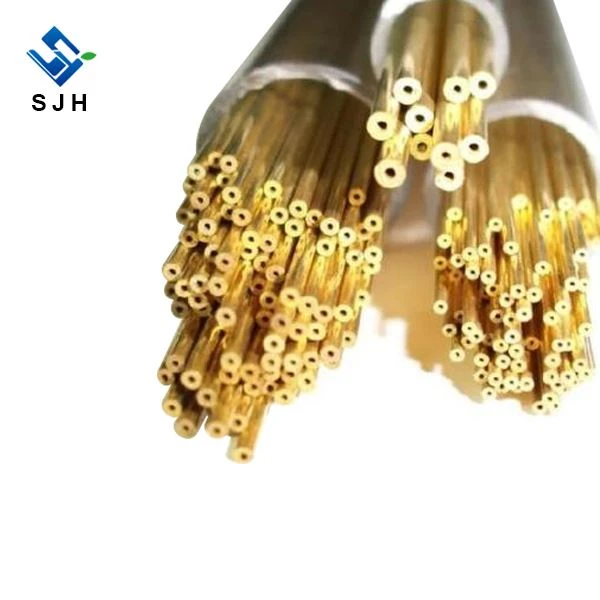
If you are interested in purchasing copper alloy tubes or have any questions about the materials, please feel free to contact me for further discussion. I'm looking forward to working with you to meet your copper alloy tube needs.
References
- ASM Handbook, Volume 2: Properties and Selection: Nonferrous Alloys and Special - Purpose Materials. ASM International.
- Metals Handbook Desk Edition, 3rd Edition. ASM International.
- Copper Development Association (CDA) Technical Guides on Copper Alloys.