

Hey there! As a copper alloy tube supplier, I often get asked about the thermal conductivity of copper alloy tubes. It's a pretty important topic, especially for industries where heat transfer is a big deal. So, let's dive right in and explore what the thermal conductivity of copper alloy tubes is all about.
First off, let's understand what thermal conductivity means. In simple terms, thermal conductivity is a measure of how well a material can conduct heat. A high thermal conductivity means that the material can transfer heat quickly and efficiently, while a low thermal conductivity means that it's not so good at heat transfer.
Copper is well - known for its excellent thermal conductivity. Pure copper has a thermal conductivity of around 401 W/(m·K) at room temperature. That's pretty impressive! But copper alloy tubes are a bit different. When we alloy copper with other elements, the thermal conductivity can change.
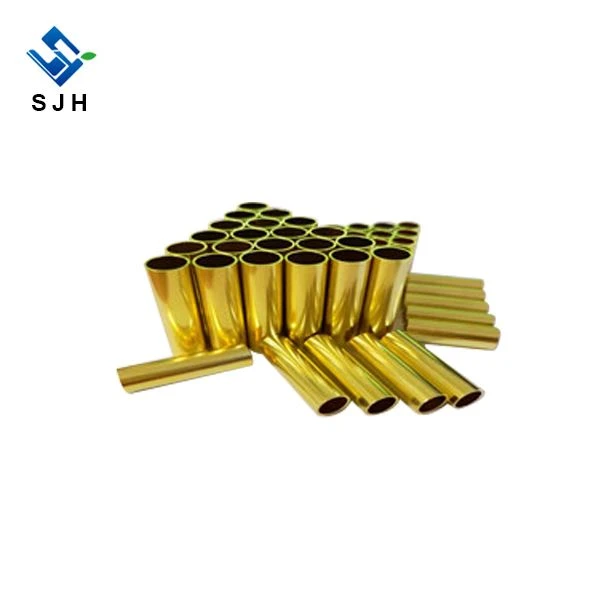

Let's take a look at some common copper alloy tubes that we supply.
One of the popular ones is the H65 Brass Round Tube. H65 brass is an alloy that contains about 65% copper and the rest is mainly zinc. The addition of zinc to copper reduces the thermal conductivity compared to pure copper. The thermal conductivity of H65 brass is typically in the range of 110 - 120 W/(m·K). This reduction in thermal conductivity is due to the fact that the zinc atoms disrupt the regular lattice structure of copper, making it a bit harder for heat to flow through the material.
Another common alloy is the C2680 Brass Tube. C2680 brass is also a copper - zinc alloy, but with a different composition compared to H65 brass. It usually has a copper content of around 63 - 68%. The thermal conductivity of C2680 brass is similar to that of H65 brass, in the ballpark of 110 - 120 W/(m·K). The reason for the similar thermal conductivity is that the main alloying element is still zinc, and the effect on the lattice structure and heat transfer is comparable.
Then we have the C3604 Brass Tube. C3604 brass is a free - machining brass alloy. It contains copper, zinc, and a small amount of lead. The lead in C3604 brass helps with machining, but it also has an impact on the thermal conductivity. The thermal conductivity of C3604 brass is generally in the range of 100 - 110 W/(m·K). The presence of lead further disrupts the lattice structure of the copper - zinc alloy, reducing the heat - conducting ability.
Now, you might be wondering why we use copper alloy tubes instead of pure copper tubes if the thermal conductivity is lower. Well, there are several reasons.
One big reason is cost. Pure copper can be quite expensive, especially in large quantities. Copper alloys are often more cost - effective while still maintaining a relatively good level of thermal conductivity.
Another reason is mechanical properties. Copper alloys can have better strength, hardness, and corrosion resistance compared to pure copper. For example, brass alloys like H65, C2680, and C3604 are more resistant to corrosion in certain environments, which makes them suitable for a wider range of applications.
In industries such as HVAC (heating, ventilation, and air conditioning), heat exchangers, and refrigeration systems, the thermal conductivity of copper alloy tubes is crucial. These systems rely on efficient heat transfer to work properly. The moderate thermal conductivity of copper alloy tubes, combined with their other beneficial properties, makes them a great choice.
In HVAC systems, copper alloy tubes are used in condensers and evaporators. The heat needs to be transferred from the refrigerant to the surrounding air or vice versa. The relatively good thermal conductivity of the tubes ensures that this heat transfer happens efficiently, which in turn helps the system to operate at optimal performance.
In heat exchangers, copper alloy tubes are used to transfer heat between two fluids. The ability of the tubes to conduct heat quickly allows for a more effective exchange of thermal energy, improving the overall efficiency of the heat exchanger.
When it comes to choosing the right copper alloy tube for a specific application, it's important to consider the required thermal conductivity as well as other factors such as mechanical properties, corrosion resistance, and cost.
If you need a high - thermal - conductivity tube and cost is not a major concern, you might lean towards a tube with a higher copper content. On the other hand, if you need a tube with good mechanical properties and corrosion resistance, and a slightly lower thermal conductivity is acceptable, then an alloy like C3604 brass might be a better choice.
We, as a copper alloy tube supplier, have a team of experts who can help you select the right tube for your needs. We understand that every application is unique, and we're here to provide you with the best solution.
If you're in the market for copper alloy tubes, whether it's for a small - scale project or a large - scale industrial application, don't hesitate to reach out. We can provide you with detailed information about the thermal conductivity and other properties of our tubes, as well as offer competitive pricing.
So, if you're interested in discussing your requirements, starting a procurement process, or just want to learn more about our copper alloy tubes, feel free to get in touch. We're looking forward to working with you and helping you find the perfect copper alloy tubes for your business.
References
- "Materials Science and Engineering: An Introduction" by William D. Callister Jr. and David G. Rethwisch
- "Handbook of Copper and Copper Alloys" by Y. S. Touloukian, C. Y. Ho, and P. E. Liley