

What is the carbon steel thermal expansion coefficient?
As a carbon steel supplier, I often encounter questions from clients regarding the various properties of carbon steel, and one topic that frequently comes up is the thermal expansion coefficient of carbon steel. Understanding this property is crucial for a wide range of applications, from construction to manufacturing, as it can significantly impact the performance and durability of carbon steel products.
Thermal expansion is a fundamental physical phenomenon where materials change in size or volume in response to temperature variations. When a material is heated, its atoms or molecules gain energy and start to vibrate more vigorously, causing the material to expand. Conversely, when cooled, the material contracts as the atomic or molecular vibrations decrease. The thermal expansion coefficient is a measure of how much a material expands or contracts per unit length or volume for a given change in temperature.
For carbon steel, the thermal expansion coefficient is influenced by several factors, including its chemical composition, microstructure, and the temperature range over which the expansion occurs. Generally, carbon steel has a relatively high thermal expansion coefficient compared to some other materials, such as ceramics or certain types of alloys. This is due to the nature of the iron - carbon alloy system and the way the atoms are arranged in the crystal lattice of carbon steel.
The thermal expansion coefficient of carbon steel is typically expressed in units of length per unit length per degree Celsius (e.g., mm/m°C or in/in°F). For common carbon steels, the linear thermal expansion coefficient at room temperature (around 20°C or 68°F) is approximately in the range of 10 - 13 × 10⁻⁶ /°C. However, this value can vary depending on the specific type of carbon steel. For example, low - carbon steels, which have a relatively low carbon content (usually less than 0.3%), may have a slightly lower thermal expansion coefficient compared to high - carbon steels, which can have carbon contents up to 2% or more.
The variation in the thermal expansion coefficient with temperature is also an important consideration. As the temperature increases, the thermal expansion coefficient of carbon steel generally increases as well. This non - linear behavior means that when designing structures or components made of carbon steel, engineers need to take into account the expected temperature range and how the material will expand or contract over that range. For instance, in a high - temperature industrial application, such as a furnace or a power plant, the expansion of carbon steel pipes and structures due to heating must be carefully calculated to prevent issues like stress cracking, buckling, or joint failure.
In practical applications, the thermal expansion of carbon steel can have both positive and negative effects. On the positive side, it can be used to advantage in some manufacturing processes. For example, in shrink - fitting operations, a carbon steel part is heated to expand it, and then a mating part is inserted. As the heated part cools and contracts, it creates a tight and secure fit.
On the other hand, the thermal expansion of carbon steel can also pose challenges. In construction, for example, large - scale carbon steel structures like bridges or high - rise buildings need to be designed with expansion joints to accommodate the thermal expansion and contraction caused by seasonal temperature changes. Failure to account for these changes can lead to structural damage over time.
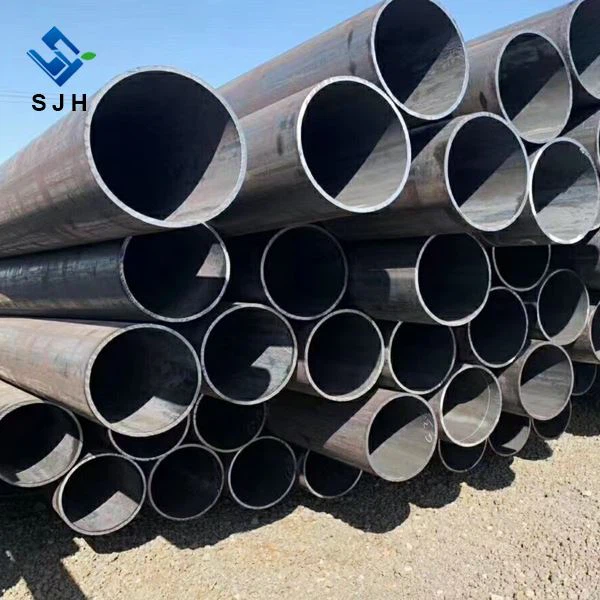
When it comes to our carbon steel products, we offer a wide range of options to meet different customer needs. If you are looking for high - quality seamless carbon steel pipes, you can check out our Seamless Steel Seamless Steel Pipe. These pipes are known for their excellent mechanical properties and are suitable for various applications, including oil and gas transportation, construction, and machinery manufacturing.
For those in need of corrosion - resistant options, our Stainless Steel Pipe is a great choice. Although stainless steel is a different type of steel alloy, it shares some similarities with carbon steel in terms of its mechanical behavior, and understanding thermal expansion is also important for its proper use.
In addition, for applications in low - temperature environments, we provide Low Temperature Carbon Steel Pipe. These pipes are specifically designed to maintain their strength and ductility at low temperatures, and their thermal expansion characteristics are carefully engineered to ensure reliable performance in cold conditions.

As a carbon steel supplier, we understand the importance of providing accurate information about the properties of our products. Our team of experts is always available to assist you in selecting the right carbon steel for your specific application, taking into account factors such as the thermal expansion coefficient, mechanical strength, and corrosion resistance. Whether you are a small - scale manufacturer or a large - scale construction company, we can offer customized solutions to meet your requirements.
If you are interested in purchasing carbon steel products or have any questions about the thermal expansion coefficient or other properties of carbon steel, we encourage you to contact us for a detailed discussion. Our sales team will be happy to provide you with more information, including product specifications, pricing, and delivery options.
In conclusion, the thermal expansion coefficient of carbon steel is a critical property that affects its performance in a wide range of applications. By understanding this property and its variations, engineers and designers can make informed decisions when using carbon steel in their projects. At our company, we are committed to providing high - quality carbon steel products and the technical support needed to ensure the success of your applications. So, don't hesitate to reach out to us for all your carbon steel needs.
References
- ASM Handbook Volume 1: Properties and Selection: Irons, Steels, and High - Performance Alloys. ASM International.
- Metals Handbook Desk Edition, Third Edition. ASM International.