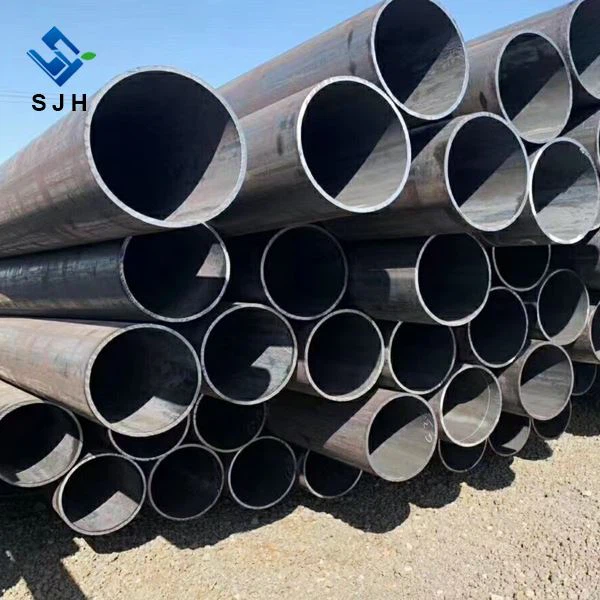
Seamless Steel Seamless Steel Pipe
Seamless steel pipe is a kind of long steel with a hollow cross-section and no seams around. Here is the product introduction:
Production process
Seamless steel pipes are made from a single piece of metal. Through processes such as piercing and rolling, solid tube billets are processed into hollow steel pipes, which have high dimensional accuracy and surface quality.
Material
Common materials include carbon steel (such as Q235, 20# steel), alloy steel (such as 16Mn, 40Cr), stainless steel (such as 304, 316L), etc. Different materials have different properties to meet various engineering requirements.
Features
High strength: It can withstand significant pressure and tensile force, making it suitable for high-pressure and high-temperature working environments.
- Good sealing performance: No weld seams, less likely to have leakage issues, ensuring the safety and stability of medium transmission.
Strong corrosion resistance: Stainless steel seamless steel pipes have excellent corrosion resistance and can resist the erosion of acids, alkalis and other chemical substances.
- Excellent surface quality: Smooth surface with low roughness, which is conducive to reducing resistance during fluid transportation and improving transportation efficiency.
Application fields
- Construction engineering: It is used for supports in building structures, bridge piers, etc., and can bear relatively large loads.
- Machinery manufacturing: Producing mechanical parts such as hydraulic cylinders and pneumatic cylinders to meet high-precision and high-strength requirements.
Petroleum and chemical industry: Transporting petroleum, natural gas, chemical raw materials, etc., maintaining excellent performance in harsh working conditions.
Automobile manufacturing: For components such as drive shafts and hydraulic system pipelines in automobiles, seamless steel pipes are required for their high strength and reliability.
In the power industry: used for heat-receiving surface tubes of power station boilers, steam pipes, etc., capable of withstanding high-temperature and high-pressure steam.
Specification and model
Seamless steel pipes come in a wide variety of specifications and models, with outer diameters ranging from a few millimeters to several meters and multiple options for wall thickness. Common specifications include outer diameters of 10mm to 1020mm and wall thicknesses of 1mm to 100mm. Users can select the appropriate specification and model based on their actual needs.Seamless steel pipe is a kind of long steel with a hollow cross-section and no seams around. Here is the product introduction:
Production process
Seamless steel pipes are made from a single piece of metal. Through processes such as piercing and rolling, solid tube billets are processed into hollow steel pipes, which have high dimensional accuracy and surface quality.
Material
Common materials include carbon steel (such as Q235, 20# steel), alloy steel (such as 16Mn, 40Cr), stainless steel (such as 304, 316L), etc. Different materials have different properties to meet various engineering requirements.
Features
High strength: It can withstand significant pressure and tensile force, making it suitable for high-pressure and high-temperature working environments.
- Good sealing performance: No weld seams, less likely to have leakage issues, ensuring the safety and stability of medium transmission.
Strong corrosion resistance: Stainless steel seamless steel pipes have excellent corrosion resistance and can resist the erosion of acids, alkalis and other chemical substances.
- Excellent surface quality: Smooth surface with low roughness, which is conducive to reducing resistance during fluid transportation and improving transportation efficiency.
Application fields
- Construction engineering: It is used for supports in building structures, bridge piers, etc., and can bear relatively large loads.
- Machinery manufacturing: Producing mechanical parts such as hydraulic cylinders and pneumatic cylinders to meet high-precision and high-strength requirements.
Petroleum and chemical industry: Transporting petroleum, natural gas, chemical raw materials, etc., maintaining excellent performance in harsh working conditions.
Automobile manufacturing: For components such as drive shafts and hydraulic system pipelines in automobiles, seamless steel pipes are required for their high strength and reliability.
In the power industry: used for heat-receiving surface tubes of power station boilers, steam pipes, etc., capable of withstanding high-temperature and high-pressure steam.
Specification and model
Seamless steel pipes come in a wide variety of specifications and models, with outer diameters ranging from a few millimeters to several meters and multiple options for wall thickness. Common specifications include outer diameters of 10mm to 1020mm and wall thicknesses of 1mm to 100mm. Users can select the appropriate specification and model based on their actual needs.Seamless steel pipe is a kind of long steel with a hollow cross-section and no seams around. Here is the product introduction:
Production process
Seamless steel pipes are made from a single piece of metal. Through processes such as piercing and rolling, solid tube billets are processed into hollow steel pipes, which have high dimensional accuracy and surface quality.
Material
Common materials include carbon steel (such as Q235, 20# steel), alloy steel (such as 16Mn, 40Cr), stainless steel (such as 304, 316L), etc. Different materials have different properties to meet various engineering requirements.
Features
High strength: It can withstand significant pressure and tensile force, making it suitable for high-pressure and high-temperature working environments.
- Good sealing performance: No weld seams, less likely to have leakage issues, ensuring the safety and stability of medium transmission.
Strong corrosion resistance: Stainless steel seamless steel pipes have excellent corrosion resistance and can resist the erosion of acids, alkalis and other chemical substances.
- Excellent surface quality: Smooth surface with low roughness, which is conducive to reducing resistance during fluid transportation and improving transportation efficiency.
Application fields
- Construction engineering: It is used for supports in building structures, bridge piers, etc., and can bear relatively large loads.
- Machinery manufacturing: Producing mechanical parts such as hydraulic cylinders and pneumatic cylinders to meet high-precision and high-strength requirements.
Petroleum and chemical industry: Transporting petroleum, natural gas, chemical raw materials, etc., maintaining excellent performance in harsh working conditions.
Automobile manufacturing: For components such as drive shafts and hydraulic system pipelines in automobiles, seamless steel pipes are required for their high strength and reliability.
In the power industry: used for heat-receiving surface tubes of power station boilers, steam pipes, etc., capable of withstanding high-temperature and high-pressure steam.
Specification and model
Seamless steel pipes come in a wide variety of specifications and models, with outer diameters ranging from a few millimeters to several meters and multiple options for wall thickness. Common specifications include outer diameters of 10mm to 1020mm and wall thicknesses of 1mm to 100mm. Users can select the appropriate specification and model based on their actual needs.Seamless steel pipe is a kind of long steel with a hollow cross-section and no seams around. Here is the product introduction:
Production process
Seamless steel pipes are made from a single piece of metal. Through processes such as piercing and rolling, solid tube billets are processed into hollow steel pipes, which have high dimensional accuracy and surface quality.
Material
Common materials include carbon steel (such as Q235, 20# steel), alloy steel (such as 16Mn, 40Cr), stainless steel (such as 304, 316L), etc. Different materials have different properties to meet various engineering requirements.
Features
High strength: It can withstand significant pressure and tensile force, making it suitable for high-pressure and high-temperature working environments.
- Good sealing performance: No weld seams, less likely to have leakage issues, ensuring the safety and stability of medium transmission.
Strong corrosion resistance: Stainless steel seamless steel pipes have excellent corrosion resistance and can resist the erosion of acids, alkalis and other chemical substances.
- Excellent surface quality: Smooth surface with low roughness, which is conducive to reducing resistance during fluid transportation and improving transportation efficiency.
Application fields
- Construction engineering: It is used for supports in building structures, bridge piers, etc., and can bear relatively large loads.
- Machinery manufacturing: Producing mechanical parts such as hydraulic cylinders and pneumatic cylinders to meet high-precision and high-strength requirements.
Petroleum and chemical industry: Transporting petroleum, natural gas, chemical raw materials, etc., maintaining excellent performance in harsh working conditions.
Automobile manufacturing: For components such as drive shafts and hydraulic system pipelines in automobiles, seamless steel pipes are required for their high strength and reliability.
In the power industry: used for heat-receiving surface tubes of power station boilers, steam pipes, etc., capable of withstanding high-temperature and high-pressure steam.
Specification and model
Seamless steel pipes come in a wide variety of specifications and models, with outer diameters ranging from a few millimeters to several meters and multiple options for wall thickness. Common specifications include outer diameters of 10mm to 1020mm and wall thicknesses of 1mm to 100mm. Users can select the appropriate specification and model based on their actual needs.