

Aluminum alloys are widely used in various industries due to their excellent properties such as lightweight, high strength, and good corrosion resistance. Among the numerous aluminum alloys available, 6061 and 7075 are two of the most popular choices. As an aluminum alloy supplier, I often encounter customers who are confused about the differences between these two alloys. In this blog post, I will delve into the key differences between 6061 and 7075 aluminum alloys to help you make an informed decision for your specific applications.
Chemical Composition
The chemical composition of an aluminum alloy plays a crucial role in determining its properties. Both 6061 and 7075 are heat-treatable alloys, but they have distinct chemical compositions.
6061 aluminum alloy is a medium-strength alloy that contains magnesium and silicon as its primary alloying elements. The typical chemical composition of 6061 aluminum alloy is approximately 0.4 - 0.8% silicon, 0.7% iron, 0.15 - 0.4% copper, 0.15% manganese, 0.8 - 1.2% magnesium, 0.04 - 0.35% chromium, 0.25% zinc, 0.15% titanium, and the remainder being aluminum. The presence of magnesium and silicon allows 6061 to be heat-treated to achieve a good balance of strength, corrosion resistance, and machinability.
On the other hand, 7075 aluminum alloy is a high-strength alloy that contains zinc as its primary alloying element. The typical chemical composition of 7075 aluminum alloy is approximately 1.2 - 2.0% copper, 0.3% iron, 0.1% manganese, 2.1 - 2.9% magnesium, 0.18 - 0.28% chromium, 5.1 - 6.1% zinc, 0.2% titanium, and the remainder being aluminum. The high zinc content in 7075 contributes to its exceptional strength, making it one of the strongest aluminum alloys available.
Mechanical Properties
The mechanical properties of 6061 and 7075 aluminum alloys differ significantly due to their distinct chemical compositions.
In terms of strength, 7075 aluminum alloy outperforms 6061. The ultimate tensile strength of 7075-T6 (a common temper) can reach up to 83,000 psi (pounds per square inch), while the ultimate tensile strength of 6061-T6 is around 45,000 psi. This makes 7075 ideal for applications that require high strength, such as aerospace components, military equipment, and high-performance sporting goods.
However, 6061 aluminum alloy has better corrosion resistance compared to 7075. The presence of magnesium and silicon in 6061 forms a protective oxide layer on the surface of the alloy, which helps to prevent corrosion. In contrast, the high zinc content in 7075 makes it more susceptible to corrosion, especially in harsh environments. To improve the corrosion resistance of 7075, it is often anodized or coated with a protective layer.
Another important mechanical property is machinability. 6061 aluminum alloy is known for its excellent machinability, which means it can be easily cut, drilled, and shaped using conventional machining methods. This makes 6061 a popular choice for applications that require complex machining operations, such as automotive parts and consumer electronics. 7075 aluminum alloy, on the other hand, has relatively poor machinability due to its high strength and hardness. Specialized machining techniques and tools are often required to machine 7075 effectively.
Weldability
Weldability is an important consideration for many applications. 6061 aluminum alloy has good weldability and can be welded using various welding methods, such as gas tungsten arc welding (GTAW) and gas metal arc welding (GMAW). When welded, 6061 retains a significant portion of its strength and corrosion resistance.
In contrast, 7075 aluminum alloy has poor weldability. The high zinc content in 7075 makes it prone to hot cracking during the welding process, which can significantly reduce the strength and integrity of the weld joint. As a result, welding 7075 requires specialized techniques and careful control of the welding parameters. In many cases, alternative joining methods, such as mechanical fastening or adhesive bonding, are preferred for 7075 applications.
Applications
The differences in the properties of 6061 and 7075 aluminum alloys make them suitable for different applications.
6061 aluminum alloy is widely used in a variety of industries due to its good balance of properties. It is commonly used in automotive parts, such as engine blocks, wheels, and suspension components, due to its lightweight and corrosion resistance. 6061 is also used in the construction industry for applications such as window frames, door frames, and structural components. In addition, 6061 is popular in the consumer electronics industry for making laptop cases, mobile phone frames, and other electronic enclosures. You can also find 6061 in 1060 Aluminum Pipe which is used in various piping systems.
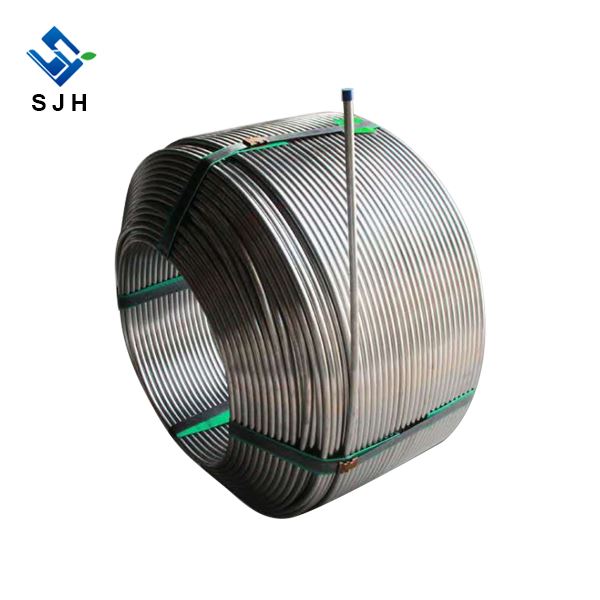
7075 aluminum alloy is primarily used in applications that require high strength and lightweight. It is extensively used in the aerospace industry for manufacturing aircraft components, such as wings, fuselages, and landing gear. 7075 is also used in the military industry for making weapons, armor, and military vehicles. In the sporting goods industry, 7075 is used to make high-performance bicycles, tennis rackets, and golf clubs. Additionally, Capillary Coiled Tubing and TC2 Titanium Alloy Aheet Plate are related products that may be used in conjunction with 7075 in specific applications.
Cost
Cost is another factor to consider when choosing between 6061 and 7075 aluminum alloys. Generally, 7075 aluminum alloy is more expensive than 6061 due to its higher strength and the more complex manufacturing process required to produce it. The high cost of 7075 may limit its use in some applications where cost is a major concern.
Conclusion
In conclusion, 6061 and 7075 aluminum alloys have distinct differences in their chemical composition, mechanical properties, weldability, applications, and cost. 6061 is a medium-strength alloy with good corrosion resistance, machinability, and weldability, making it suitable for a wide range of applications. 7075, on the other hand, is a high-strength alloy with excellent strength-to-weight ratio but poor weldability and corrosion resistance, making it ideal for applications that require high strength and lightweight.
As an aluminum alloy supplier, I can provide you with high-quality 6061 and 7075 aluminum alloys to meet your specific requirements. If you are unsure which alloy is the best choice for your application, our team of experts can help you make an informed decision. We are committed to providing you with the best products and services, and we look forward to working with you. If you are interested in purchasing aluminum alloys, please feel free to contact us for a quote and to discuss your specific needs.

References
- ASM Handbook, Volume 2: Properties and Selection: Nonferrous Alloys and Special-Purpose Materials
- Aluminum Association Technical Papers
- Metals Handbook Desk Edition, Third Edition